

This is a cross-post of the new Five Minute Money Newsletter that Speedwell Research Cofounder Drew Cohen started. Subscribe free here.

Get smarter on investing, business, and personal finance in 5 minutes.
Hello! I wanted to share a popular recent stock breakdown of mine on Adobe. (Their stock is down ~60% and now trades at 14x free cash flow and is still growing). This post was orginally shared with readers of Five Minute Money weeks ago. We’ve already published over a dozen stock breakdowns and other investing posts on the newsletter. You can join (totally free) below!
Stock Breakdown

Can a stock drop 50% for seemingly no reason?
What if that sell-off happened while revenue and profits kept increasing…
…and the broader market was up?
Usually when there is a prolonged sell-off of that magnitude there is either: 1) financials deteriorating, or 2) a bear market.
There revenues grew 10% y/y and margins are expanding…
And the market is up +39% over the period it has been down -57%.
So, what is driving this sell-off?
Unsurprisingly, AI.
We know markets tend to overreact.
So, is this a moment of Mr. Market’s irrationality?
Or an opportunity for investors?
In this Five Minute Money, we will break down Adobe stock and argue that the real risks, are not what investors may think…
There are three key factors investors need to think about:
1) A business model transition
2) Competition (especially in their analytics segment which has more “encroachment” risk)
3) And a key AI question.
Let us first start with how the business makes money.
Business.
They have three reportable segments:
1) Digital Media: $17.4 billion in revenues, growing
2) Digital Experiences: $5.4 billion in revenues, growing
3) Publishing and Advertising: $100 million in revenues and shrinking. This is a small legacy business we will ignore
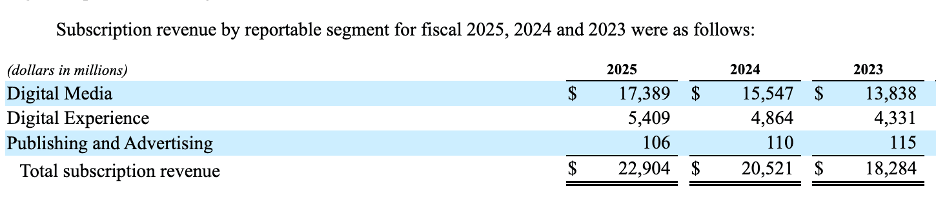
The Digital Media segment is their main money maker.
It boasts incredibly high gross margins of 95%.

This segment includes their flagship apps like Adobe Photoshop, Illustrator, Lightroom, Premiere Pro, and Firefly.
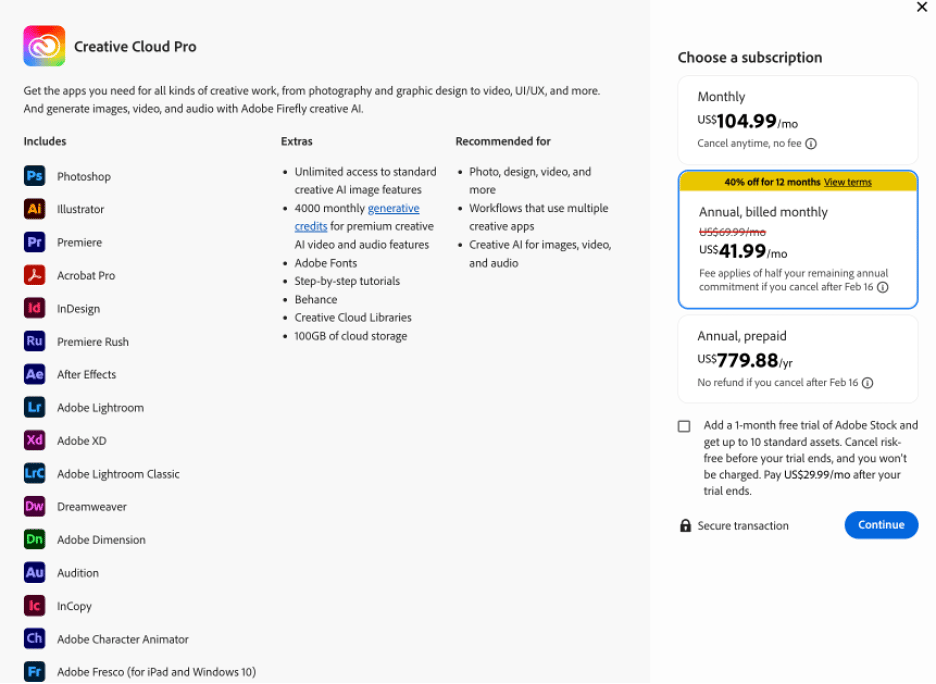
It also houses their Creative Cloud Subscription, which gives users access to all of their apps. (Similar to buying the Microsoft Suite)
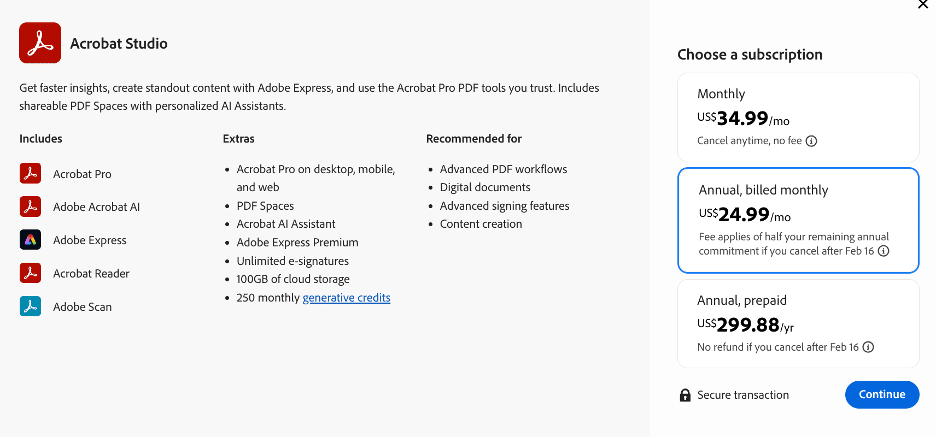
Also in here is their PDF editor, Acrobat solutions.
Last disclosed, in 2024 the “Creative” business was 80% of revenues ($12.7bn). and the Document Cloud was the other 20% ($3.2bn).
Document cloud was growing ARR at 22% and Creative was growing at 11%.
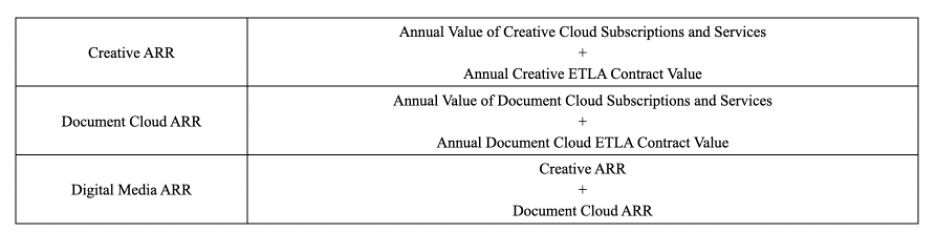
The Creative business caters to artists, designers, and developers for photo editing, design, video, animation production, and mobile and game development. They primarily focus on enterprise here, although there is a large swath of “prosumers” who use their products that blur the line.
Competition with creative tools is coming primarily from Canva on the low-end and services that focus on one vertical like Figma in the UI/UX, and Davinci, CapCut, or Apple’s Final Cut Pro for video editing.
Canva offersfree to start design software that can be used for a variety of different design products. They are focused more at the lower end of the market, whereas Adobe profits most at the higher end.
However, Adobe still competes at the lower end because getting broad familiarity with their tools is important because novice designers or students can eventually move up to the professional world.
Canva last raised at a $42 billion valuation and is estimated to have around $3.5 billion in revenues, showing they are taking a real bite out of Adobe’s market.
Their website is very easy to get started on, whereas Adobe is known to be more “intimidating”.
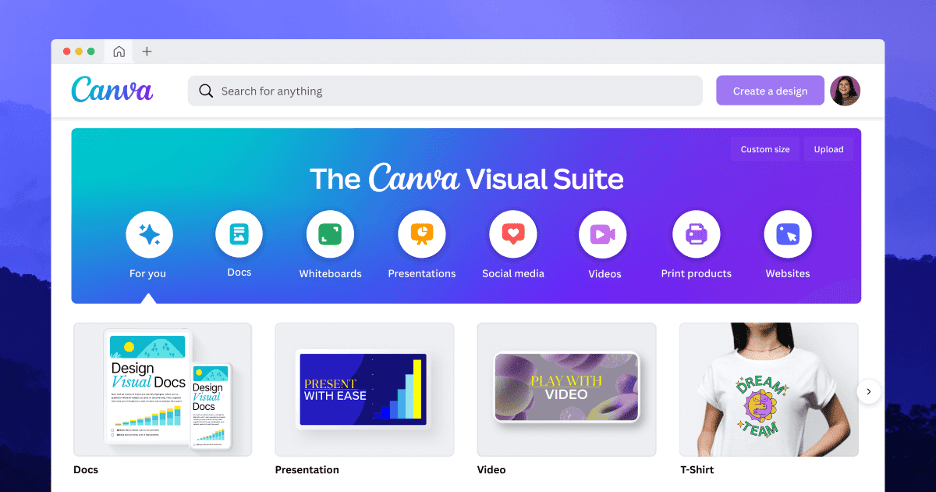
Canva isn’t complacent with their existing market though. They made an acquisition of Affinity which has more complex tools for professionals.
They lack the full integrations that Adobe has though (more on this later).
Adobe also has file advantage in that many enterprises want an Adobe .psd file so they can make changes later. (Yes there are tools to convert files, but they aren’t perfect and then may require more adjustments to make it right.)
Figma is a UI/ UX design application that designs websites, mobile apps, and software.
It is very popular and integrates better with the actual coding of the applications. A designer can turn elements into “pasteable” code.

It was viewed as such a superior product to Adobe’s “XD” product that Adobe tried to acquire Figma for $20 billion.
The acquisitions was blocked though and Adobe ceded this market.
Now Adobe integrates with Figma, who they are trying to treat as just a point solution tool to the Adobe platform.
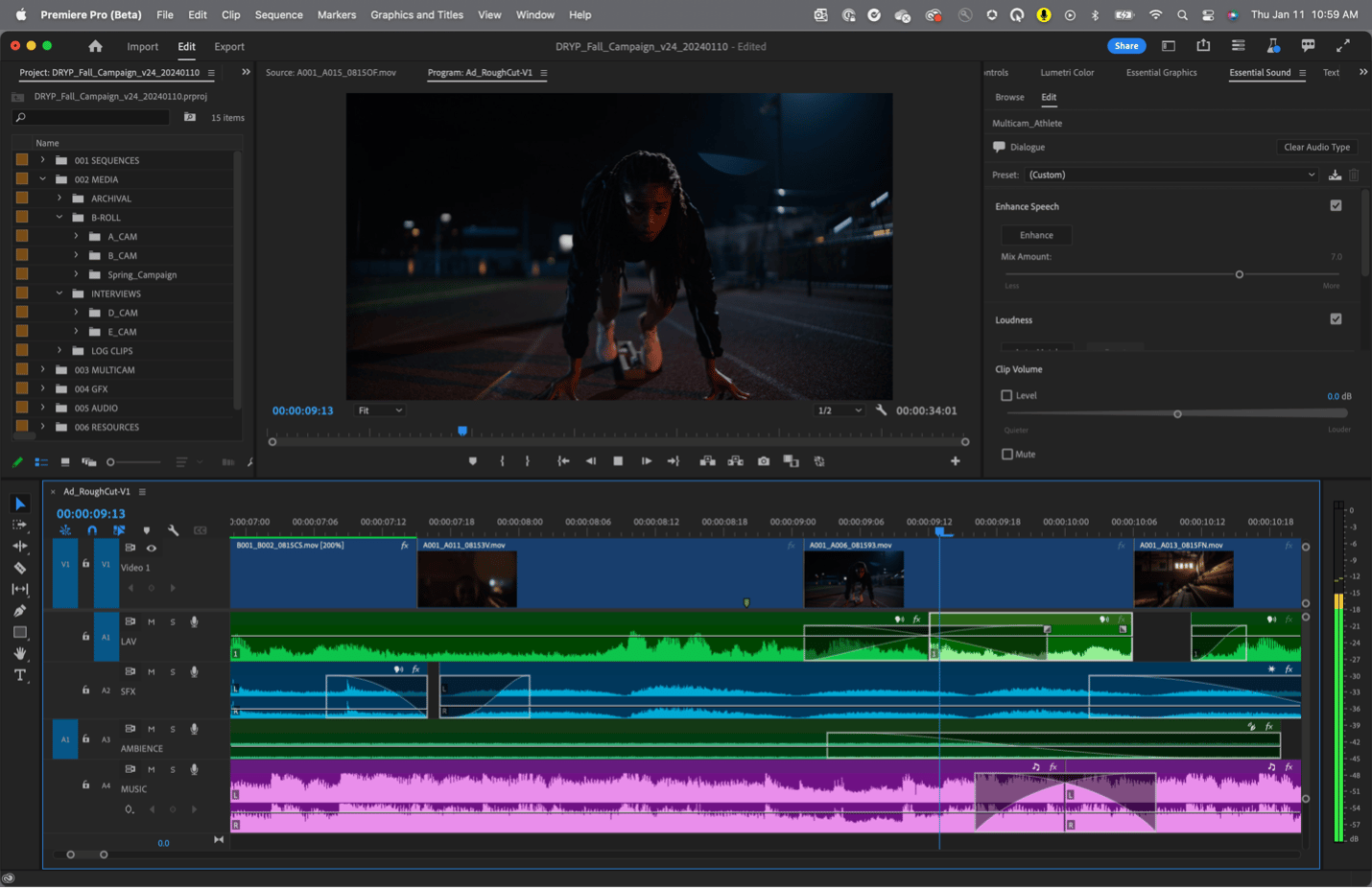
Video editing is also a fragmented market with Adobe’s Premiere Pro in the lead. Adobe has a good chunk of corporate, ad agencies, prosumer usage.
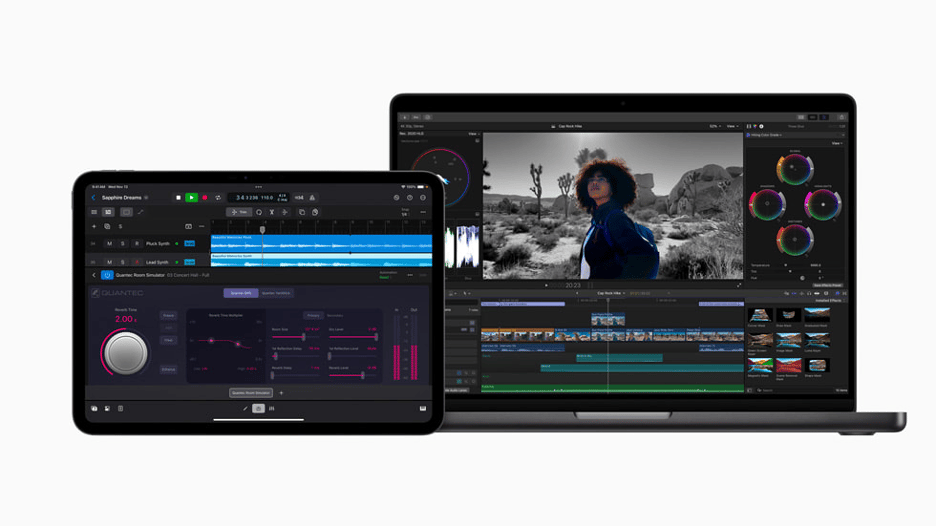
Apple’s Final Cut Pro is also up there, though, followed by DaVinci Resolve, which has a pretty good free product as well as premier tools. Avid Media Composure is used by most of Hollywood, and then Bytedance’s CapCut is on the low end for social media (especially mobile editing).
Since Adobe Premiere is so popular, many enterprises may request the raw Adobe prproj file format, so they can make changes later (similar to Photoshop). This keeps even freelancers who don’t have a big benefit of being in the Adobe ecosystem on the Adobe Premier video editor.
Others might be good at one task, but Adobe is the best across multiple tasks and integrates everything.
It is similar to how many view Slack as better than Teams, but Teams is a part of the Microsoft ecosystem, which makes it easier to use it.
The other business in the Digital Media segment is the Document Cloud Business, which caters to basically anyone that needs to use PDFs. This has very different end markets including legal and financial industries, as well as widespread business usage.
These two suites of products represent $17.4 billion in revenues or about 75% of total subscription revenue.
They also sell …
… to read the full breakdown on Adobe, click the link below to sign up for the Five Minute Money newsletter for free. There will be no paywall on this newsletter ever!
This was a cross-post of the new Five Minute Money Newsletter that Speedwell Research Cofounder Drew Cohen started. If you want to get future editions, make sure you sign-up above!
For more on Adobe, you can also check out my YouTube video here
Hi, I'd love to get you free access to Stock Analysis Pro for becoming an affiliate!
https://stockanalysis.com/affiliates