
Uber Stock Breakdown (Five Minute Money)
Will AV kill Uber?

This is a cross-post of the new Five Minute Money Newsletter that Speedwell Research Cofounder Drew Cohen started. Subscribe free here.

Get smarter on investing, business, and personal finance in 5 minutes.
Stock Breakdown

For over a decade, Uber was the world’s most famous “bad business.”
As an asset-light, marketplace with no incremental costs to booking an additional ride, their profitability should have come easily.
After all, they simply took a % of each transaction with no cost of goods sold.
Their monetization model wasn’t a lot different from eBay...
Except eBay was surprisingly profitable just 3 years after founding…
Uber would take 14 years!
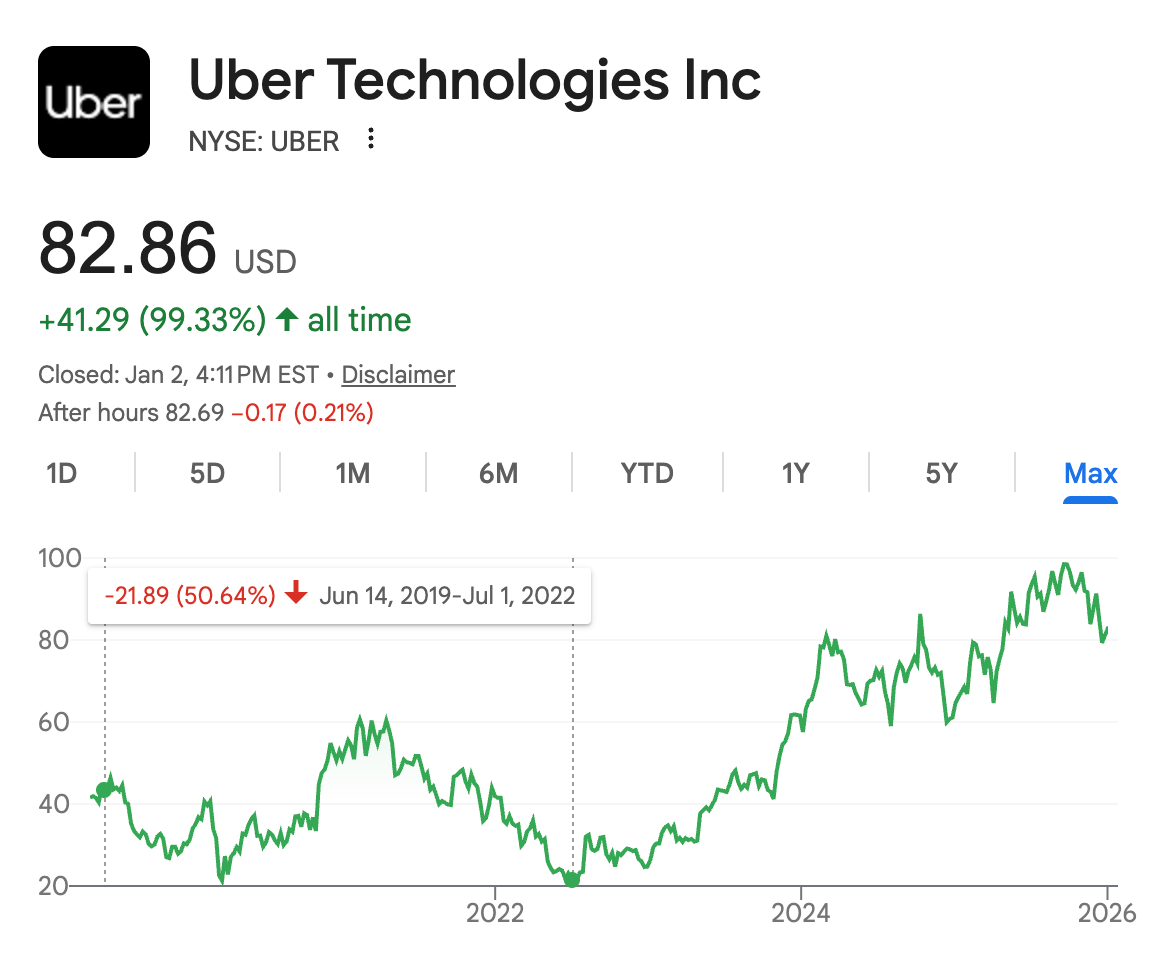
This long journey led to investors losing faith in the stock, sending it down to $21 a share in 2022, or >50% below it’s IPO price…
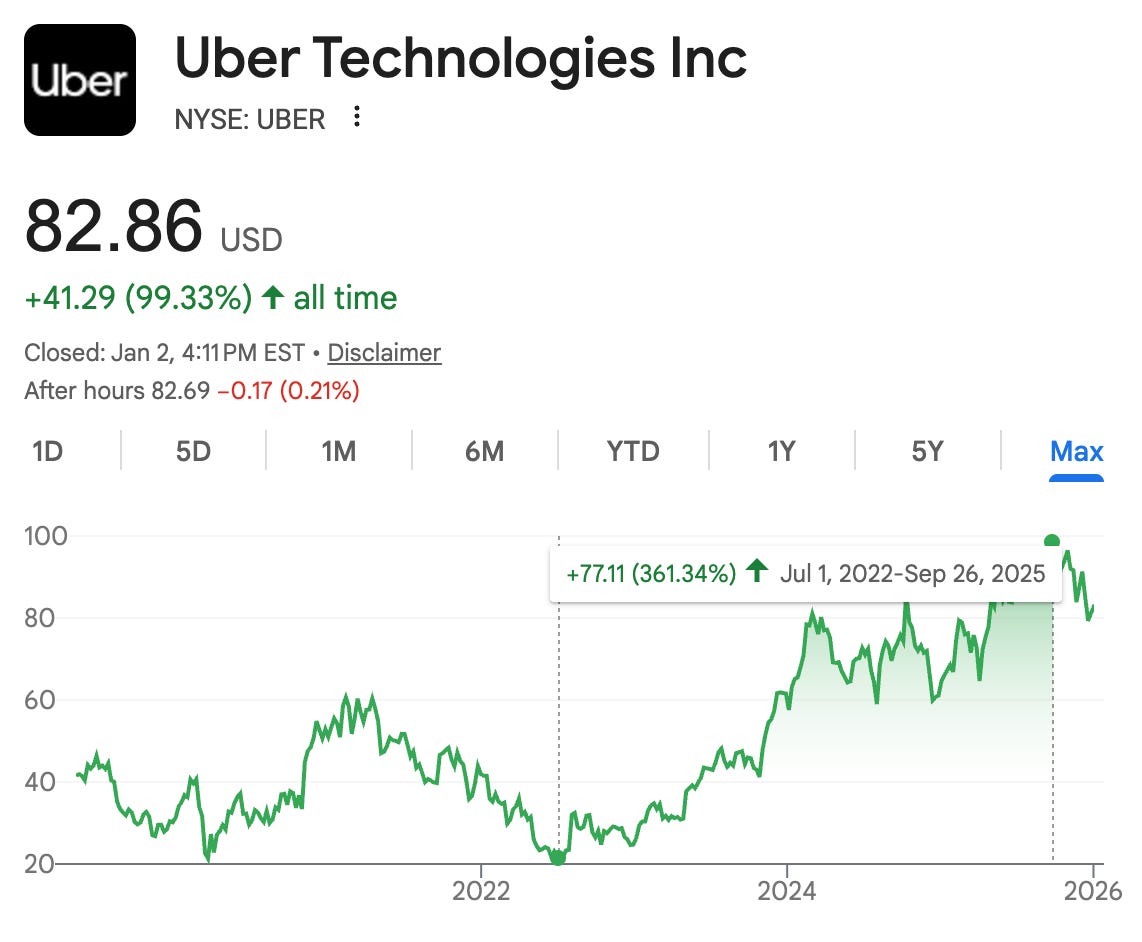
However, once they proved their profitability, it jumped +360%.
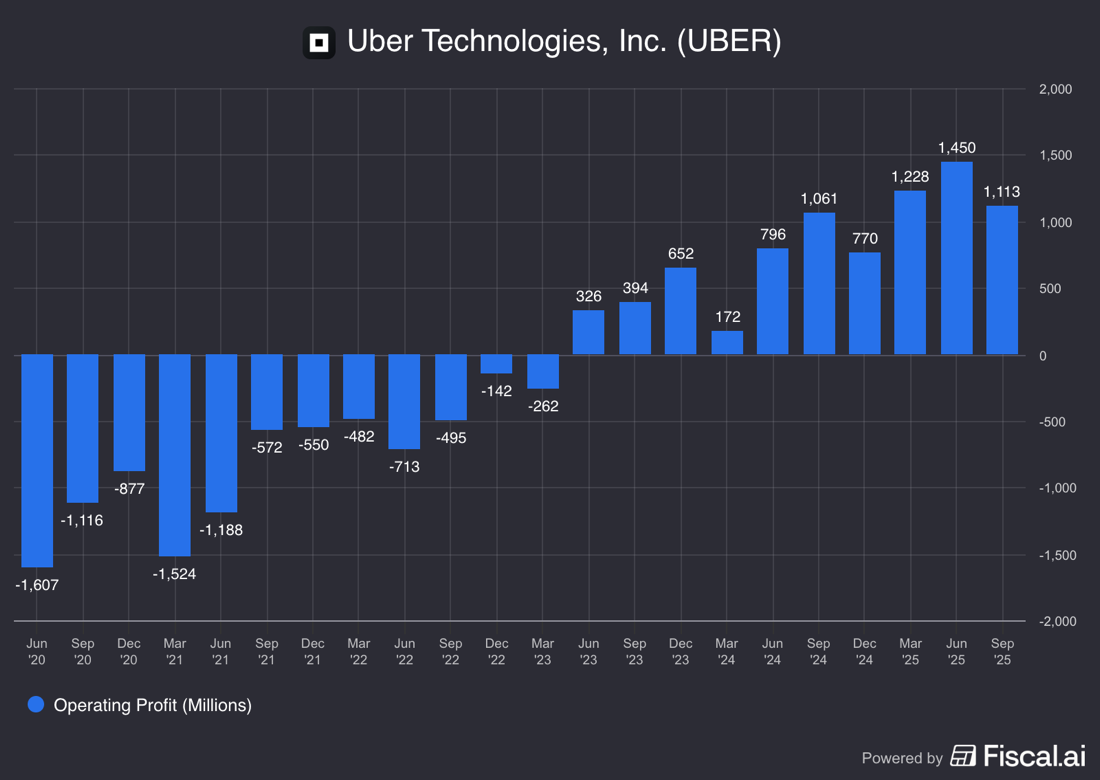
Why was Uber such a bad business model for so long and what changed to make them profitable in 2023?
And is their business model secure, or are Autonomous Vehicles going to make their profitability short lived?
Business Model.
Let’s back up to talk about the business basics.
Every month, about 190 million people use Uber.
The value of all transactions on the app for the past twelve months was about $184 billion.
Uber generates revenue by taking a cut of each transaction.
For ride-hail, they keep about 25-30% of the transaction value, with the rest going to the driver and to pay city taxes and insurance.
For food delivery, Uber keeps about 20%.
In the last year, they generated about $50bn in revenues and $4.5bn in operating profit.
The beauty of this model is that Uber doesn’t have to pay to have a staff of drivers or fleet of vehicles.
They have very low fixed costs and only pay drivers when there is a ride or order to fulfill.
They also have “dynamic pricing”, which allows them to adjust pricing up when demand is high and lower it when demand is low.
Why did it take over $30 billion in losses to ever make this business model work?
A Decade Long Broken Business.
In 2019 alone, Uber burned a whopping $8.5 billion on $14 billion in revenue.
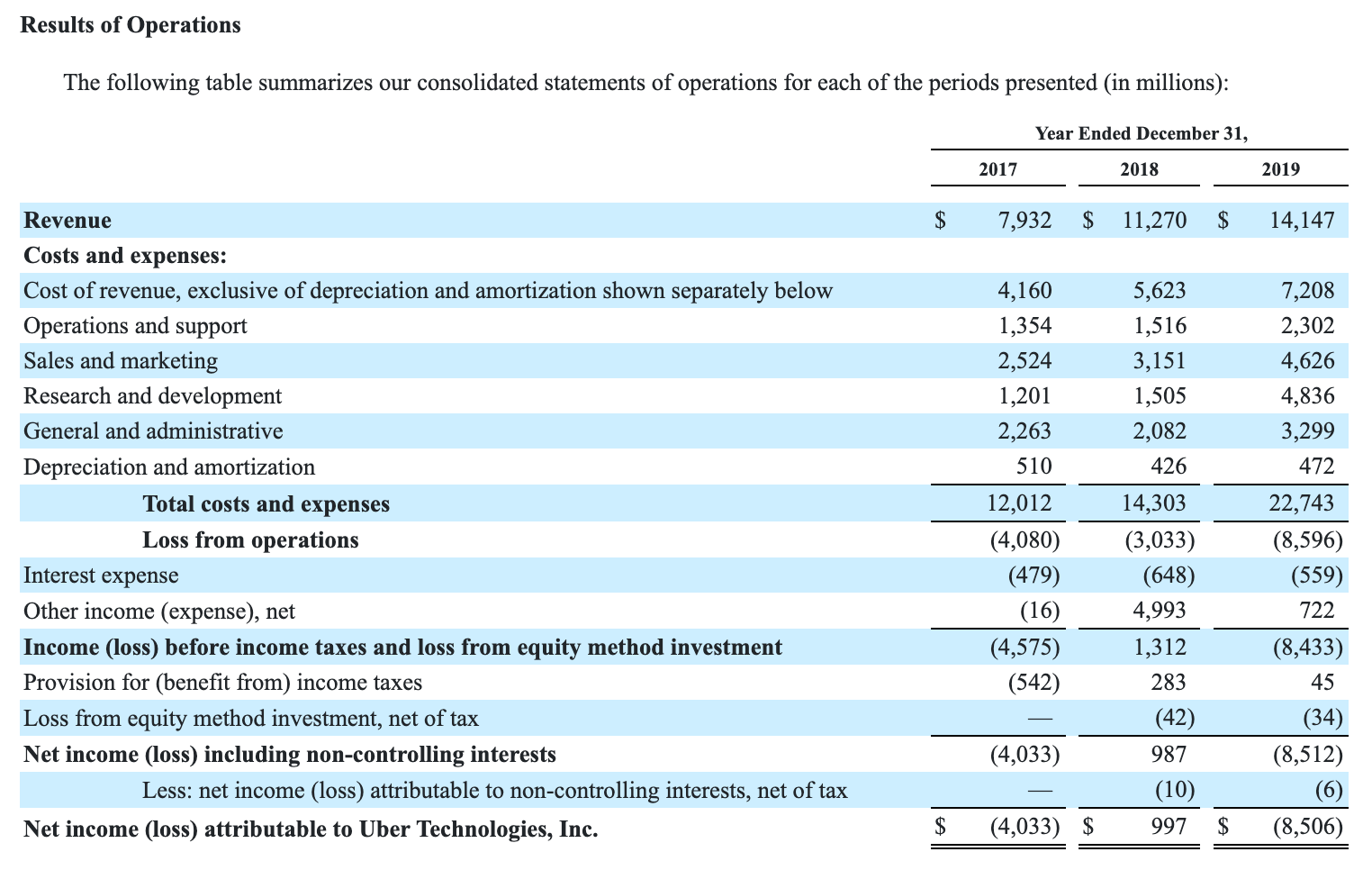
To understand what changed, just think of these two data points.
$4.6bn was Sales & Marketing expense for 2019.
That same year they did $13 billion in revenues, meaning they spent 35% of all revenues on sales & marketing.
Do you know what Sales & Marketing is today after they increased revenues to $50 billion?
… to read the full breakdown on Uber, click the link below to sign up for the Five Minute Money newsletter for free. There will be no paywall on this newsletter ever!
This was a cross-post of the new Five Minute Money Newsletter that Speedwell Research Cofounder Drew Cohen started. If you want to get future editions, make sure you sign-up above!